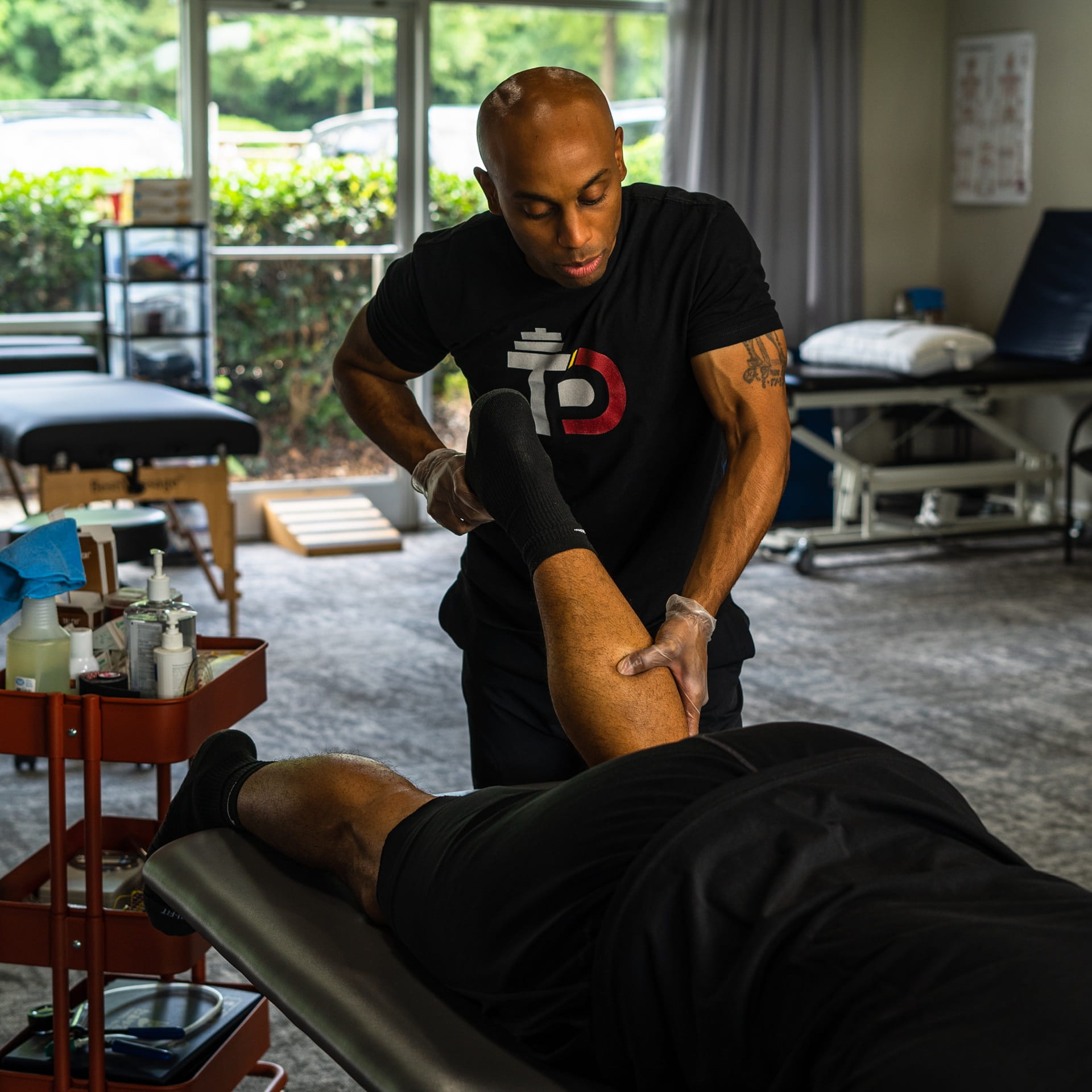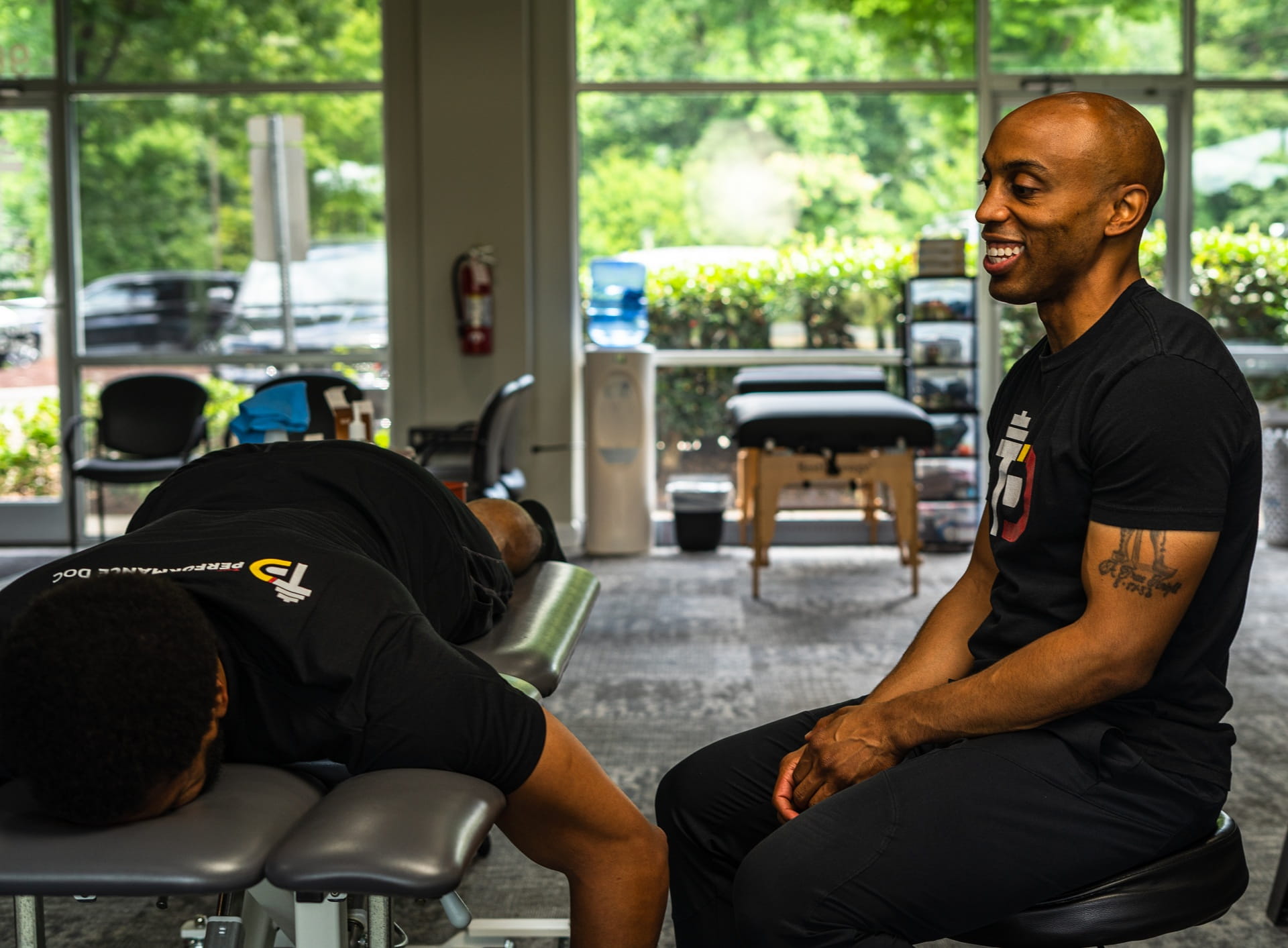
Every week, a patient walks into my clinic and delivers the same line: “My last therapist told me this is as good as it gets”. They still have a noticeable limp, a persistent quad lag, and a total lack of confidence when it comes to cutting or jumping. If you are a clinician who has ever said those words, or an athlete who has been forced to accept them, I am calling you out. You haven’t reached the limit of the patient’s potential; you have reached the limit of a broken framework.
Rehab is broken because standards have been replaced by shortcuts. Most traditional protocols follow a predictable and dangerous pattern: pain goes down, time passes, and the patient is cleared simply because a calendar hit a certain month. At The Performance Doc, we reject clinical guesswork. We use The PRO Method to turn rehab chaos into a repeatable, defensible process where every milestone is earned, not given.
What is The PRO Method for ACL Rehabilitation?
The PRO Method is a systematic clinical decision framework that prioritizes objective performance criteria over traditional time-based recovery. It ensures athletes progress through seven phases of ACL rehab based on measurable biomechanical data rather than calendar weeks.
The Contextual Shift: Why Traditional ACL Protocols Fail
The problem in modern sports medicine has never been a lack of information; it is the application of that information under pressure. Physical therapy school teaches tools, but it does not teach prioritization. This creates a massive “knowledge gap” where new graduates enter the field afraid they will “mess up” the surgeon’s work, leading them to rely on vague, one-size-fits-all PDF protocols.
Did you know that 56% of therapists use manual muscle testing as their only measure of strength? In a high-performance environment, a “5 out of 5” manual test is a participation trophy, not a clinical metric. It tells you nothing about an athlete’s ability to manage force or decelerate. The PRO Method removes this mental chaos by providing an algorithm for real-world rehab, allowing clinicians to make decisions they can actually defend with data.
The PRO Method for ACL Rehab: A Decision Framework for Elite Return to Sport
The PRO Method applies this hierarchy across seven distinct phases. Progression is never based on the sun coming up; it is based on meeting the standard.
Phase 1: Maximum Protection (0–3 Weeks)
The goal is securing the foundation and protecting the repair.
- The Standard: You do not pass until you achieve 0–100° of AROM and can perform a Straight Leg Raise (SLR) without a lag.
- The Philosophy: If you cannot stabilize your own leg, you have no business putting weight on it.
Phase 2: Protection (3–6 Weeks)
Healing has started, but precision remains the priority.
- The Standard: Criteria include 0–125° of AROM, a 30-second single-leg stance, and 30 consecutive SLRs without lag.
- The Shift: We prioritize quad recruitment and normalizing the gait pattern.
Phase 3: Functional Restoration (6–12 Weeks)
We focus on restoring pain-free movement for daily tasks.
- The Standard: ROM must be 95% symmetrical, and the patient must complete a Y-balance reach at 80% of the uninvolved leg without hip compensation.
- The “Danger Zone”: We must be mindful of ligamentization (weeks 6–12), where the graft is at its weakest point even if the patient feels great.
Phase 4: Progressive Overload (8–16 Weeks)
This is where traditional systems fail because they under-dose strength.
- The Standard: The math must be undeniable: 25 single-leg squats to a 20-inch box and 25 single-leg bridges on a bench.
Phase 5: Intro to Impact (12–24 Weeks)
We do not initiate jogging because the calendar says “Week 12”.
- The Standard: You don’t touch a treadmill until you can perform 12 reps at 70% of novice norms for squats, lunges, and RDLs, and show a quad strength deficit under 30%.
Phase 6: Deceleration (5–8 Months)
Most clinicians test the “go” but never test the “brakes”.
- The Standard: Before cutting, we require <20% quad strength deficit and <20% deficit in deceleration peak force on force plates. If you can’t stop, you shouldn’t start.
Phase 7: Return to Sport (6–12 Months)
The final “Exit Exam” provides the mathematical proof of durability.
- The Standard: Data must show >95% symmetry on Triple Hop te UI sts, <10% quad deficit, and an ACL-RSI score of 80% or greater to prove psychological readiness. Athletes remain non-contact until at least month nine.
Precision Tools and Trust Signals
We don’t “eyeball” performance. We use a biomechanically-driven “trust stack” to measure success:
- Dynamometer & Force Plates: Measuring strength, “brakes,” and power with real numbers.
- NMES & BFR: Neuromuscular Electrical Stimulation and Blood Flow Restriction training are used to enhance early quad activation and combat atrophy.
- Strengthlevel.com: Using objective novice and intermediate norms to ensure loading is appropriate for the athlete’s size.
Frequently Asked Questions about ACL Rehab
How do I know if I am ready to run after ACL surgery?
Running is earned through performance, not a date on a calendar. According to The PRO Method, you are ready to initiate jogging when you can perform 12 reps of a Goblet Squat at 70% of your body weight, demonstrate a quad strength deficit of less than 30%, and perform 15 single-leg hops with zero wobble.
Why do I still limp even though my pain is gone?
Pain-free is the baseline for being a person; it is not the standard for being an athlete. A persistent limp usually indicates “glitchy software”—a Neuromuscular Control issue where your brain does not yet trust your body to manage force. You cannot load a limp; you must re-pattern the control.
What is the best graft choice for ACL reconstruction?
There is no universal “best,” but your choice in Phase Zero (surgery) dictates your rehab roadmap. The Patellar Tendon (BPTB) offers fast bone-to-bone healing but carries a higher risk of front knee pain. The Quad Tendon is becoming more popular, with 20% more collagen than patellar grafts, but I notice patients have great difficulty with quad activation. Hamstring grafts have variable thickness and require avoiding isolated hamstring loading in early phases.
What happens if I rush my ACL rehab timeline?
Rushing back because of a date is how re-tears happen. Your graft undergoes ligamentization and is actually at its weakest point between weeks 6 and 12, often just as you start to feel “good”. Without objective criteria, you are guessing with your career.
What should I ask my surgeon before ACL surgery?
Ask why a specific graft is superior for your sport, what rehab bottlenecks they typically see with that graft, and—most importantly—if they collaborate with a PT who uses criteria-based testing. You want a system, not a factory.
Rebuild for Durability, Not Just Clearance
Rehab is a decision-making problem before it is an exercise problem. If you are tired of following protocols that only cover the “safety basics” and are ready for a system built for high performance, you need to raise the bar. Stop being a clock clinician and start being a Performance Clinician.
Clearance is data. Durability is built.